


The Story Behind Reekie Machining
28.12.25

“Precision that is Portable” – by Philip Stein 1965
Repair techniques in pipe installations round the world have been revolutionised by an air-driven portable precision machine tool designed and manufactured by the Paisley engineering firm of David Reekie and Sons Ltd. It has cut down massive repair costs, and it has been sold to refineries in Kuwait and Venezuela, shipyards in Portugal and Norway, atomic power plants in Finland.
It all started in a Luftwaffe aerodrome between Hamburg and Cuxhaven a month before the end of the war. Company Commander David Reekie of the 7th Battalion Argyll and Sutherland Highlanders, 51st Highland Division, was ordered to capture the aerodrome with his “Jocks”. He did.
But what halted him in his tracks once he took his objective was a long row of filing cabinets down one side of the giant-sized hangar. For above one of the cabinets was the eye-catching notice “SCOTLAND”.
Naturally he opened it to see what on earth it contained. To his amazement he found hundreds of aerial photographs of Scotland taken by Luftwaffe reconnaissance aircraft. Among them were pictures of every sizeable shipyard and engineering factory in Scotland with detailed descriptions and the best bombing targets pinpointed!
They were souvenirs much too good to miss and he “acquired” one of each. Came demobilisation and David Reekie, who had been a draughtsman-designer of valves and pumps with Mirrlees Watson and Harland’s of Alloa before the war, decided to look for a new job.
The thought of being incarcerated in a stuffy drawing office held no attractions at all after roaming round the world for six and a half years — Cairo, El Alamein, North Africa, Sicily, Italy, Normandy, Belgium, Holland, and Germany.
So he found himself a job with a small engineering business for machine tools and other engineering products. It did at least get him into the fresh air, and his entrée to Scottish shipyards and engineering factories was the Luftwaffe aerial photographs which he took round and presented to fascinated managements.
He built up good connections, bought out the business, and eventually employed six engineering salesmen. Then ten years ago, out of the blue, came the opportunity and a challenge that he seized with both hands.
Yarrow’s shipyard on the Clyde needed a portable machine tool for doing precision work on pipe flanges aboard a destroyer they were building.
David Reekie was shown the job that needed to be done and he was given carte blanche to buy a machine for doing it at the International Machine Tool Exhibition in Hanover, which he was attending. But there was no such machine tool to be had. No one in Europe, and so far as he could find out, or anywhere else either, made such a machine.
There was only one thing to do: sit down and design one himself. For he was far-sighted enough to realise there was a big potential market for a precision portable machine tool of this type with the growth of petro-chemical plant and nuclear power.
Both called for massive and intricate welded pipe units. It would become increasingly difficult, time-consuming and expensive to strip them down for machining in workshops should they need repair or adjustment.
He worked away at a design and had five or six prototypes built before he found the answer and patented it. But that did not mean the problems were solved. Far from it.
David Reekie only had a drawing office at his agency’s premises in Hope Street, Glasgow. He had no production facilities. The job had to be subcontracted. That brought its own headaches. Deliveries on time were terribly important. More and more they were not being met.
It was quite clear by now he was on to a winner. So he dropped half his agencies and moved to modest factory premises in Paisley six years ago. Since then he has gone from strength to strength. Output of the portable machine tools has doubled compared with a year ago and is up three times compared with three years ago.
During the construction of the nuclear power station at Hunterston, work became necessary in the atomic reactor charging tubes. To do the job by traditional methods would have meant a delay in commissioning the reactor by anything from four to six months.
Reekie’s designed, manufactured and delivered all within the space of seven weeks four portable machine tools that did the job in situ within a fortnight. It brought congratulations and a handsome bonus from the main contractors on the site, the United Power Company, for “meeting an almost impossible delivery date”.
More recently the firm received an emergency call from a major construction company of American affiliation, the Fluor Engineering and Construction Company Ltd, who are engaged in building a chemical engineering project at Grangemouth.
Three stainless steel manhole flanges 100 feet up a 120-feet-high column were damaged. Before the advent of the Reekie machines, it was accepted practice in the chemical, shipbuilding and repair industries to dismantle defective sections of gas, hydraulic and steam piping and transport them to workshops for re-machining.
They would then be returned to the site and re-welded into position. In the case of the three damaged flanges, the cost and time taken in dismantling them would have been enormous. It would have entailed, for instance, 1,880 inches of welding.
In an on-the-site operation, one of Reekie’s latest models, the R40, with ten years of research and development behind it, turned the faces of the defective flanges and regenerated the sealing rings to the closest limits of accuracy in two days at a cost of less than £200.
Reekie’s have now received an order to design and manufacture aluminium pipe weld preparation machines for Aluminium Laboratories Ltd of Banbury — part of the powerful Aluminium Limited of Canada group of companies.
A Canadian firm had quoted a price of £1,200 for such machines. Reekie’s are going to make them for £550 apiece. And, it is claimed, because of its superior design, the Paisley machine will do the job in one-third of the time the Canadian machine would have taken.
This latest equipment will be employed on future site construction contracts on the aluminium pipelines coming into extensive use in Europe, America, Africa and the Middle East for distributing oil, methane, and water.
A few weeks ago, British Petroleum Ltd telephoned Reekie’s to say one of their machines was needed urgently in Aden. It was crated and delivered by air to London within three hours. Twelve hours later it was on the Aden site.
Next month, the firm is contracted to repair a job at the Shell refinery in Grangemouth. It will be done in 12 hours where before the plant would have been out of commission for days.
Not only are the machine tools sold, they are leased on contract so that smaller organisations unlikely to have continued use for one can still reap the benefits of having a job done in as many minutes as it used to take days.
Operators skilled in their use are on regular stand-by, ready to fly with the machine tools to any corner of the globe.
Reekie’s now make 12 different types of portable facing, turning, boring and weld preparation machine tools whose prices range from £200 to £900, with an average of around £500.
It is interesting to note that a West German firm has recently invaded the market with an electrically-driven machine which is three times the weight and up to double the cost of the Paisley product.
The Paisley firm’s production facilities are fully booked up for the next two years. The only limiting factor at the moment is the severe shortage of skilled labour. Reekie’s only use top-class fitters and toolmakers.
But expansion is going ahead. The present factory, though equipped with modern machinery, is much too small for their needs. It is chock-a-block. So an acre of ground has been bought from Paisley Corporation to extend the factory and double production capacity.
About half of the machine tools go for export and the firm has had enquiries from as far afield as Canton and Shanghai in Communist China. It is also in close and regular touch with the Russian Techimport organisation.
A map of the world in David Reekie’s office is colour-pinned like an operations map to show the firm’s far-flung connections. Red pins for the world capitals and commercial centres where agents now represent Reekie Machine Tools — Tokyo, Johannesburg, Madrid, Sydney, Lisbon, Paris, Brussels, Amsterdam, Helsinki, Oslo, New York, Vancouver.
Blue pins for the places where he has sold machine tools — nuclear and petro-chemical plants in Finland, a hydro-electric scheme in Zambia, a naval shipyard in Portugal, a civil yard in Norway, a refinery in Kuwait… India, Thailand, Holland, Aden, Venezuela and elsewhere round the globe.
A key to his success is not merely that his machine tools fill a definite need: it is that the world knows about them. For while David Reekie is an engagingly modest man who has no wish to burgeon into tycoonery (“I have no wish to be a millionaire”), he is no slouch when it comes to telling the world what he has to offer in the way of his invention.
Indeed, he has displayed a most unusual expertise in public relations in the way he has placed stories in the technical journals and world’s press. And he does the technical write-ups himself.
It is this publicity, coupled with vigorous salesmanship and the growing need for a machine tool that is apparently unique, which has brought in the world-wide enquiries and orders to this enterprising young Scottish firm, which merits all the success it has achieved — and more.
Recent Blog Articles
View blog >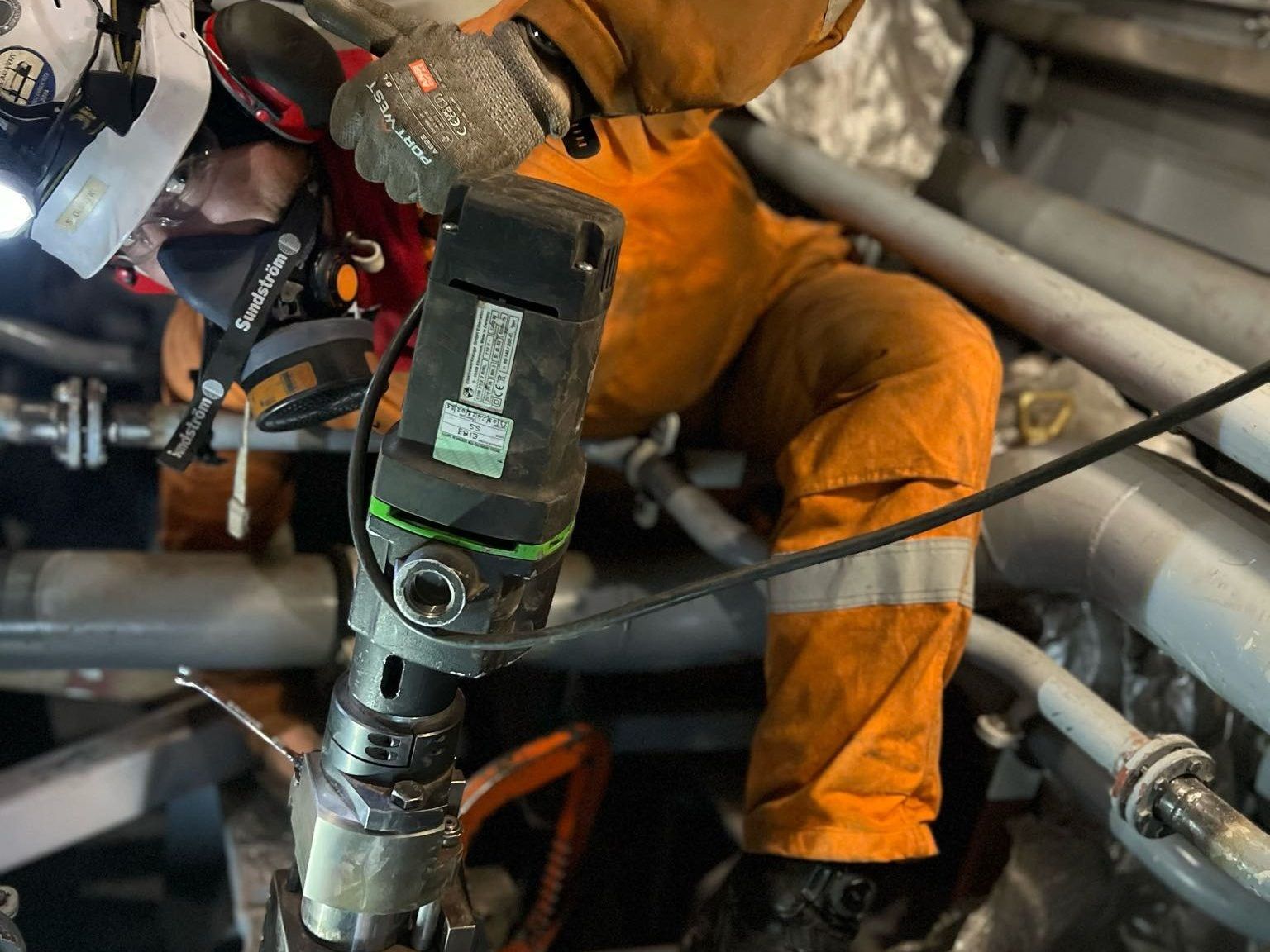
BLOG
What to Consider Before an In-Situ Machining Project
29/12/2025
What to Consider Before an In-Situ Machining Project In-situ machining can be a highly effective solution—but it isn’t always the right one. Understanding the options and gathering the right information early can significantly reduce risk, cost, and downtime. The following points are designed to help you make informed decisions and set your project up for success—whether you work with Reekie Machining or another provider. In-Situ or Off-Site Machining? The first […]
BLOG
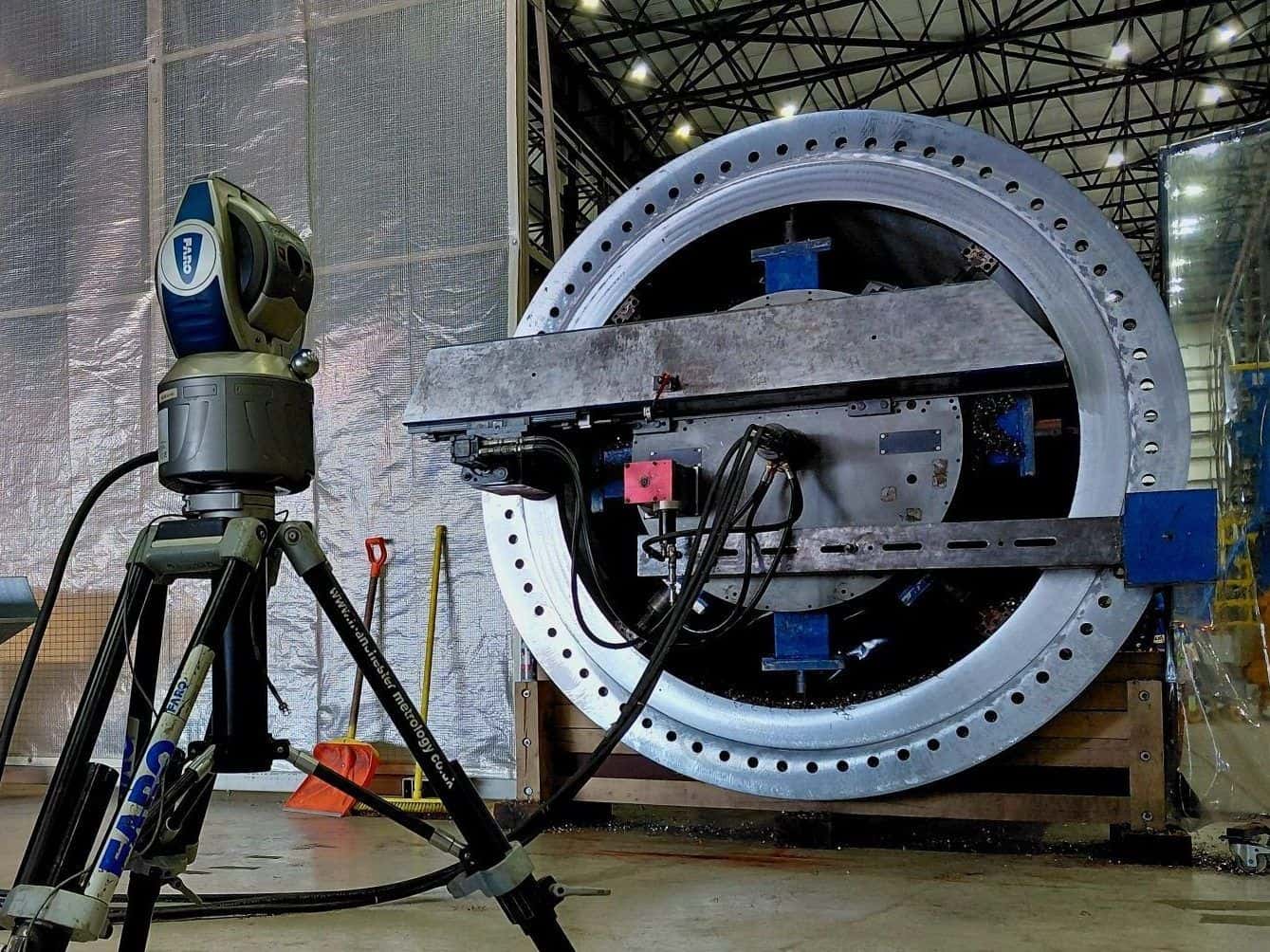
What Is In-Situ Machining?
29/12/2025
What Is In-Situ Machining? In-situ machining, also known as on-site machining, field machining, or portable machining, is the process of carrying out precision machining operations directly on installed or fixed equipment — without the need to dismantle or transport components to a workshop. Instead of removing large or critical assets, specialised portable machine tools are brought to site, allowing machining work to be completed accurately, safely, and efficiently in the […]
BLOG
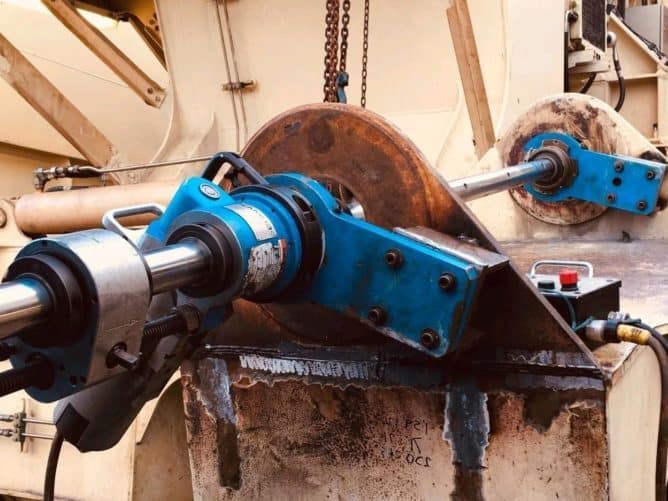
Common In-Situ Machining Applications
29/12/2025
Common In-Situ Machining Applications Common Applications of In-Situ Machining In-situ machining, also known as on-site machining or portable machining, is used across a wide range of industries to repair, modify, and restore critical components without removing them from service. Its flexibility and precision make it an essential maintenance solution where downtime, access, or component size makes workshop repairs impractical. Below are some of the most common in-situ machining applications, many […]